News

In the 60s, after many tests and trials, the global network now known as Internet was created, connecting billions of people around the world. Repeating this old idea, but updating it with new technologies, will enhance the scientific collaboration between institutions of Argentina and the rest of the world. This is the opinion of the secretary of Scientific-technological Articulation of the Ministry of Science, Technology and Productive Innovation of Argentina, Dr. Alejandro Ceccatto.
(With information from CYTA Agency - Instituto Leloir. For more information please visit http://www.neomundo.com.ar) The attempts to achieve this goal will be done through the "e-Science" program that led by Ceccatto is installing throughout the country an advanced Internet network that is called InnovaRed. Currently, this interconnection connects the scientific institutions of Buenos Aires, Rosario, Cordoba, San Luis, Villa Mercedes, Mendoza, Malargüe, La Plata, Bahía Blanca, Choele Choel, Neuquén and Bariloche. In the coming years, however, through an agreement with ARSAT and Argentina Conectada, the network will reach all scientific and educational institutions in the country.
The "e-Science" program aims to establish connectivity between scientists and researchers so they can send millions of data. The information, in this case, travels through broadband via a optical fiber of 10 gigabytes per second. "We also use computers that can hold and process this information to achieve results that have a positive impact on people's quality of life. It is, undoubtedly, a crucial tool for the advancement of Science," explains Ceccatto.
The biotechnologist Stephanie Mancini, CONICET researcher in the laboratory of Vegetable Genomics of the Leloir Institute Foundation, is a user of InnovaRed and one of hundreds of researchers benefited with the initiative. Since 2012, her laboratory is working with data from massive sequencing techniques of the genoma of the Arabidopsis thaliana and other plant species. In particular, she analyzes, along with her colleagues, information about the transcriptomes (active genes).
"Sometimes we need to transfer between 50 and 200-300 gigabytes of information to other research centers or even receive similar volumes from Europe and the United States," said Mancini, to complete. "With the use of the service of the advanced networks, we can make these transfers in a few hours instead of a few weeks. The collaboration and information exchange with research centers in Argentina and abroad becomes more agile."
Dr. Gustavo Adrián Turjanski, CONICET researcher at the Physical-Chemistry Institute of Materials, Environment and Energy (INQUIMAE), which also depends on the Faculty of Exact and Natural Sciences of the University of Buenos Aires (UBA), explains that it is increasingly important that the scientific community can analyze and quickly share large volumes of data.
"For example, the full information of a human genome can hold 200GB. If we wanted to bring information of a thousand genomes without the advanced networks, we would spend months in the process," says Turjanski, who directs the Bioinformatics Platform of Argentina, with nodes in the Institute of calculation of the Faculty of Exact and Natural Sciences of the UBA, the Catholic University of Cordoba, the National University of San Martín and the Institute of Rosario (INDEAR).
Through RedCLARA, the Latin American Cooperation of Advanced Networks, InnovaRed will also connect Argentina to research institutions in Latin America, United States, Europe and, in general, the rest of the world, bringing further development and education for the country and its inhabitants.
The network, which will be installed between Cerro Pachón, in La Serena, and Santiago (Chile), will enable bandwidths of up to 100 Gigabit per second, capacity required by the telescope when it is in operation.

LA Referencia announced the release of the new version of the aggregator of scientific publications, with features that add even more value to the service: end users can now perform their search among thousands of integrated papers in a multilingual environment, with simple routes for navigation and an adaptive interface for mobile devices.

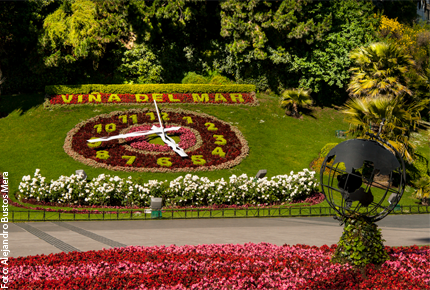
The year has come to an end and brought with it the latest edition of the DeCLARA bulletin. In its version of number 40, the publication presents, as always, relevant content that will help you to understand the ICT environment in Latin America. Our cover story is about the choice of Viña del Mar, in Chile, to host the TICAL2015. Also known as "Garden City", Viña will receive the Latin American ICT directors from July 6 to 8 of 2015. The call for papers for the meeting is already opened.
DeCLARA also brings an important report on the Strategic Plan 2014-2018 of RedCLARA, with explanations about the prospects of the Network for the next three years, reports about the participation of the advanced networks in the Football World Cup in Brazil and about the union of TERENA and DANTE in Europe, as well as an interview with Javier de la Plaza, from Telefónica, talking about the importance of TICAL for the ICT environment. DeCLARA wishes you happy holidays and a great read!
From the Press Room section of the RedCLARA's Portal you can also download all the past versions of DeCLARA.

In the framework of the TICAL Conference, for the second year, RedCLARA and the National Research and Education Networks (NRENs) of Latin America, will conduct a session bringing together young students and researchers who are developing innovative technology-based projects, and leading companies in the area, in order to publicize new developments and visualize ways to advance the process of innovation. For each work/development selected to be featured in TICAL2015, the event organizers will provide one (1) airfare to Chile (round trip) and conference registration for one of the authors.
A meeting held during the last December 12th, in Rio de Janeiro, set the final details of a project that will benefit the entire Latin American community of advanced networks: the deployment of the Escola Superior de Redes (ESR, or Superior School of Networks, in english) of Colombia, which will be inaugurated on February 13th of 2015.

Montevideo 11400. Uruguay.