


Early adopters of Blockchain LATAM conclude with transformative solutions for the region.
Jenny Flores
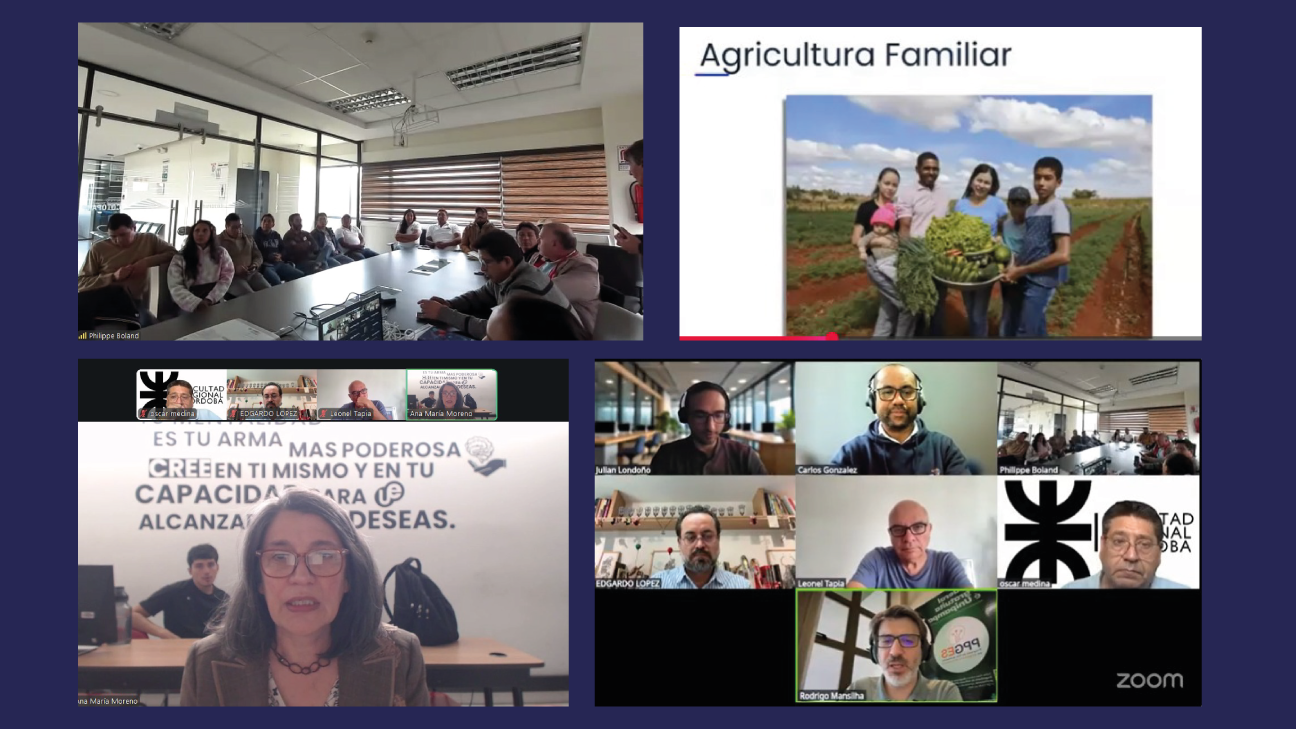 Driven by RedCLARA and LNET, the Early Adopters Blockchain LATAM Program concluded with an event showcasing the four projects developed during this edition. The day marked the end of six weeks of intensive work, during which the teams transformed their initial ideas into functional prototypes on the BELLA II Blockchain Testbed, a unique experimentation environment in Latin America.
The call for proposals, launched at the end of September, invited participants to propose innovative solutions leveraging this infrastructure to address real challenges in the region. The response was remarkable: seven countries submitted 13 proposals. After a rigorous evaluation process, four projects advanced to the immersion phase, which included technical mentoring, specialized training, and the opportunity to develop and test early operational versions of their solutions (MVPs) in a real environment.
The Demo Day showcased the teams’ progress and highlighted the value of the Early Adopters Blockchain LATAM model: the combination of open infrastructure, expert guidance, and a willing ecosystem enabled the projects to advance concretely and demonstrate how blockchain technology can become applicable and useful solutions for the region.
A Region That Moves Forward Through Collaboration
With this experience, RedCLARA and LNET reaffirm their commitment to creating spaces where technology translates into scalable solutions with regional impact. While this conclusion signifies the end of the first edition of the program, it also presents new opportunities to further enhance digital innovation in Latin America.
Carlos González, RedCLARA’s Service Manager, emphasized the program’s relevance and recalled its origin: “How do we ensure that the technological tools available in the region are really used to create solutions for the problems that affect us?” He added that the goal was to provide teams not only with infrastructure but also with expert guidance and access to applied knowledge. “Blockchain can help us tackle real challenges and generate value in Latin America.”
Pedro Gutierrez, Head of Partnership at LNET, pointed out the promise that arises when universities, innovators, infrastructure, and connectivity work together: “The four projects we see today show that it is possible to move from a pilot to a real-use case with tangible impact. Technology only makes sense when it improves people’s lives.”
The Winning Initiatives
Colmena DAO works with rural communities in Colombia, Peru, Ecuador, and Bolivia to strengthen sustainable beekeeping. It combines digital tools with community organization to improve honey production, support collective decision-making, and generate economic opportunities for women and youth. In its first phase, it developed a system in collaboration with universities, including Universidad Distrital (a member of RANATA) and Red Colmena, that tracks honey from hives to consumers, giving visibility to the work of beekeeping families. “We want every jar of honey to tell the story of those who produce it,” said its representatives. The project is now moving toward territorial pilots, connected hives, monitoring systems, and income models based on pollination and the local bioeconomy.
The System for Authorship and Ownership Validation of Works, developed by universities in Colombia and Universidad de Chile (a member of REUNA), offers artists and academics a secure and reliable way to register their works, certifying authorship and circulation with institutional backing. “Many creators lack reliable tools to validate their work,” noted the team. The initiative allows artistic portfolios to become assets with verifiable value, facilitating rights management and the development of the creative economy in academia.
From Mexico, the Curricular Transformation and Educational Innovation in Upper Secondary Education in Jalisco with Microcredentials project, developed by KeepReading and Universidad de Guadalajara (a member of CUDI), proposes a more agile and transparent way to recognize student learning. Each student can have a digital wallet storing verifiable credentials of their studies, which can be securely shared with schools or employers. “Moving from processes that currently take 35 to 60 days to verifications in seconds changes a student’s life,” said its representatives.
In the agricultural sector, Smart AGRO RAF LATAM, developed jointly by Universidade Federal de la Pampa, Brazil (a member of RNP), with support from Universidad de Antioquia (Colombia), promotes greater transparency in family farming. Its system records each stage of production, allowing farmers to demonstrate the origin and quality of their products. This helps small farmers receive fair payments and access markets that value sustainable and trustworthy practices.

Rambla República de México 6125.
Montevideo 11400. Uruguay.
Montevideo 11400. Uruguay.